BTO, BTO, BTO.
The word that seems to be on everyone’s minds nowadays (especially if you’re around your mid-twenties to thirties).
The idea of housing is still far from my mind (gotta find myself a man first), but that doesn’t stop me from feeling left out when my friends, relatives, and even colleagues discuss it.
HFE? Prime flats? MOP?
Having no idea what any of this means, I decided to ask Jamie Ng, Deputy Director (Projects Development & Marketing) at HDB.
Even though I was completely lost, she was able to (very patiently) tell me what the heck was going on.

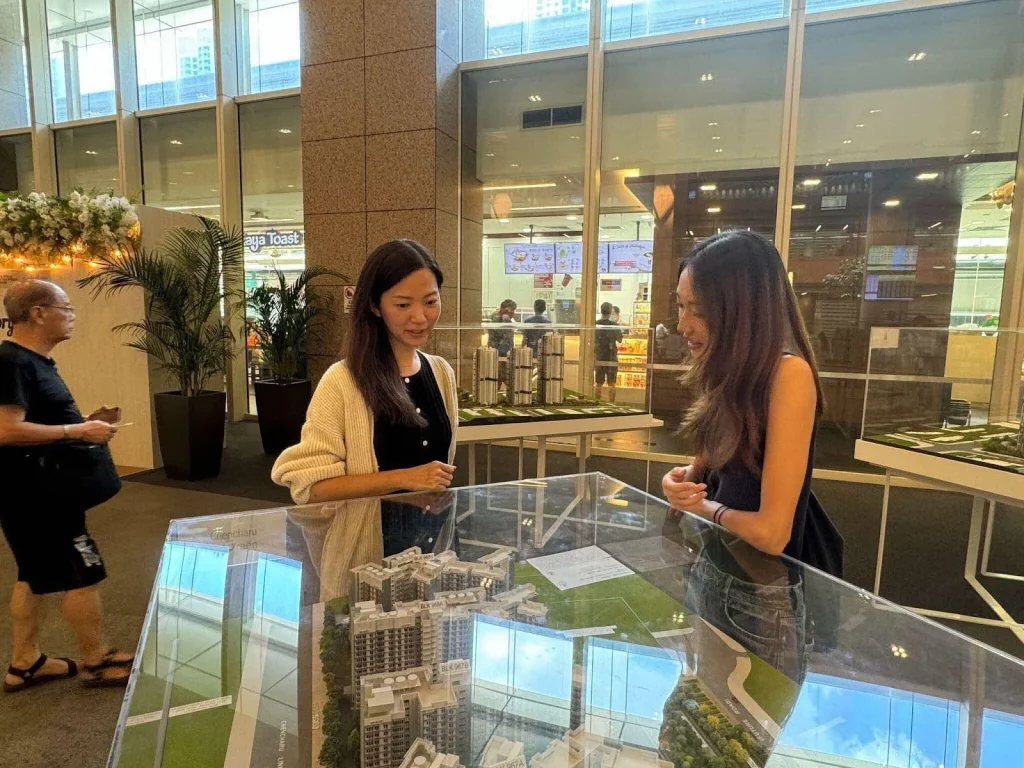
So here’s a quick guide for anyone who is as lost about the HDB BTO process as I am, so you don’t look like a dumb dumb next time someone brings it up.
Determine what you’re eligible for first
The first thing Jamie would advise young buyers to do is apply for an HDB Flat Eligibility (HFE) letter.
This tells you:
- Whether you’re eligible to buy a new or resale flat,
- Whether you can receive CPF housing grants (and the amount), and
- Whether you can take up an HDB housing loan (and the amount).
Those who prefer a loan from a financial institution can also apply for an In-Principle Approval (IPA) from HDB’s participating financial institutions when they apply for an HFE letter.
All buyers must have a valid HFE letter before they can buy a flat.
One significant element to note as you’re planning is that HDB recently introduced a new flat classification framework that comes with different conditions and restrictions for certain flat categories.
Understanding these categories upfront will help you make well-informed decisions.
What are the different categories of BTO flats now?
Since October 2024, the government has introduced three different categories for BTO flats: Standard, Plus, and Prime.
So what’s the difference?
The classification is based on the flat’s location, including factors like proximity to the city centre, transport connectivity, and availability of amenities.
Standard flats form the largest category for BTO flats, while Plus flats are those in choice locations, with more transport options, as well as proximity to the city centre and availability of amenities.
Prime flats, as the word suggests, are those that have the greatest extent of these factors.
Jamie explained that, due to the more favourable attributes of Plus and Prime flats, they have higher market values and thus receive additional government subsidies to keep them affordable.
At the same time however, these Plus and Prime flats will come with tighter rental and resale conditions, to ensure that buyers are purchasing these flats primarily to live in.
What are these rental and resale conditions?
Plus and Prime flats come with a 10-year minimum occupation period (MOP), meaning owners have to wait at least a decade before they can sell them on the open market or buy a private property.
They are also not permitted to rent out their whole units, even after the 10-year MOP.
The 10-year MOP strikes a balance between ensuring Singaporeans’ flat occupation intent and offering flexibility for home owners who may want to move for genuine reasons, Jamie explained.
Should owners decide to sell their Plus or Prime flat after the MOP ends, they are required to return a percentage of the resale or valuation price, whichever is higher, to HDB.
The subsidy recovery makes it fair to other BTO flat buyers who are not accorded additional subsidies.
The subsidy recovery percentage will be disclosed when the Plus or Prime projects go on sale, and the percentage is comparable to the additional subsidy that they receive at their flat purchase.
There are also restrictions on who owners will be able to sell their flats to. Owners of Plus and Prime flats can only sell to Singaporean households who meet the eligibility conditions.
Together, these resale conditions ensure that Plus and Prime flats remain affordable when they hit the resale market.
And what does the new flat classification mean for singles?
Under the new flat classification, Singaporean singles aged 35 and above can apply for a new 2-room Flexi flat in any location, across Standard, Plus, or Prime categories.
Previously, they could only apply for new 2-room Flexi flats in non-mature estates during HDB’s sales exercises.
BTO applications are not on a first-come, first-served basis, so there’s no need to rush
Once you’ve gotten your HFE letter, worked out your finances, and read up on your options, you’re ready to apply for a flat.
When you put in an application for a BTO flat, you have to pay an administrative fee.
Applications are not shortlisted on a first-come, first-served basis.
“So there’s no need to rush,” Jamie said.
Instead, all you have to do is submit your application online during the application period.
Once the period closes, HDB will process all the eligible applications and conduct a computerised ballot to determine the queue order for booking the flats.
So unlike concert tickets, there’s no need to camp out at your desk, refreshing the website page like a maniac in fear of losing out on getting your dream flat.
How much am I expected to pay and when?
When you successfully book a flat, you have to pay an option fee of up to S$2,000.
The amount will depend on the flat type, whether it is a 2-room Flexi flat or 3-room, or 4-room, for instance, among others. The option fee will form part of your down payment.
Within about nine months, you’ll be invited to sign the Agreement for Lease, which is when you will also make your down payment.
How much you pay depends on the type of loan you take.
For instance, if you’re taking a housing loan from HDB to pay for your flat, the down payment is 10 per cent of your flat price (which can be fully paid with CPF savings).
HDB also has schemes to help young couples.
For example, couples who qualify for the Staggered Downpayment Scheme only need to pay half their downpayment, while those under the Deferred Income Assessment (DIA) pay as little as 2.5 per cent of the flat price as the downpayment when they sign their Agreement for Lease.
Also, for those under DIA, the income assessment for CPF housing grants and HDB housing loans will be carried out closer to their key collection appointment.
By then, they are more likely to be eligible for grants and may also qualify for a higher loan amount after working for some time.
Once your flat is completed, this is when you pay the remaining flat price, including other fees such as legal fees, stamp fees, and registration fees.
This is also where you collect your keys (and take the iconic key collection photo).
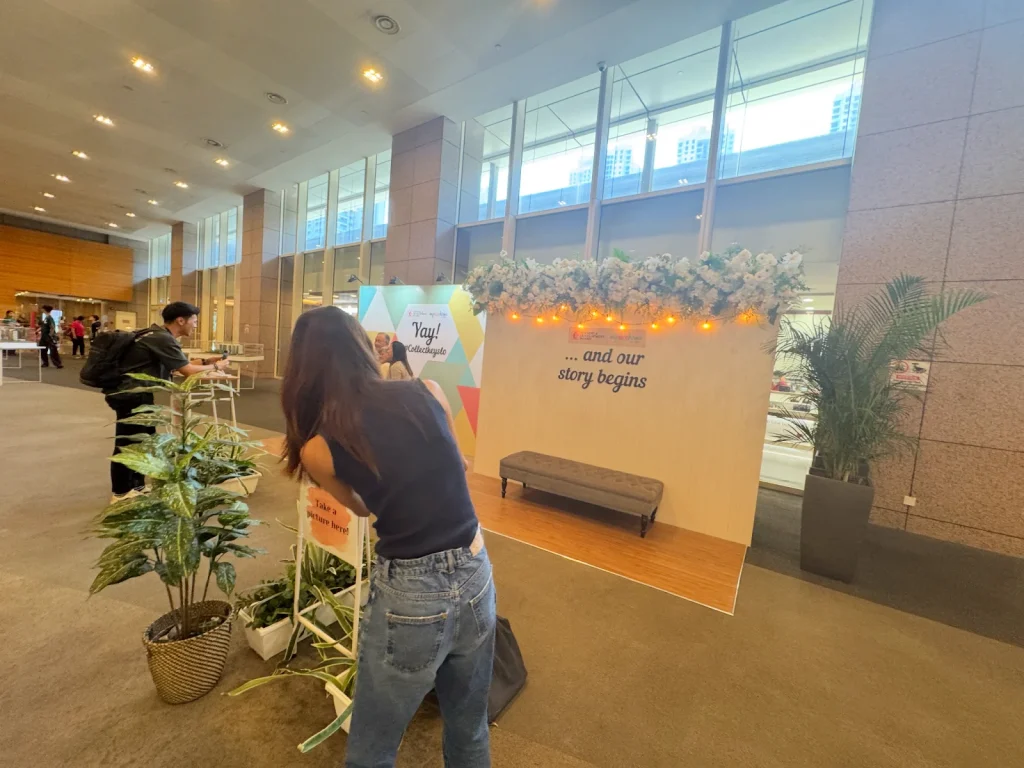
Jamie advised young buyers to make use of the information given in the HFE letter, as well as the handy calculators on the HDB website, which make it quick and easy to determine how much you need to pay in your respective milestones.
Plan ahead and apply early
Even though the HFE letter is valid for nine months, Jamie told us that people tend to apply just before sales exercises. As it takes time for HDB to process HFE letters, interested flat buyers might miss out on the sales exercise they had been eyeing.
Jamie said it typically takes around a month for the HFE letter to be processed after all the documents have been submitted, though this may vary.
So if you’ve been eyeing a flat in a location that will be offered for sale in an upcoming sales exercise, apply early.
Jamie also recommends interested buyers to subscribe to HDB’s e-Alert service, so if and when there is a sales exercise, they would know when it is.
“They can also visit our HDB Flat Portal during the sales exercises to check out the flats on offer, including the location as well as the flat prices,” Jamie explained.
The portal also shows the projects that are launching in the upcoming sales exercise as well as the deadline to apply for an HFE letter, if you wish to participate in the sales exercise. Resale flat listings are also available on the portal.
Anybody can access this portal to browse, though you need your Singpass to submit your application.
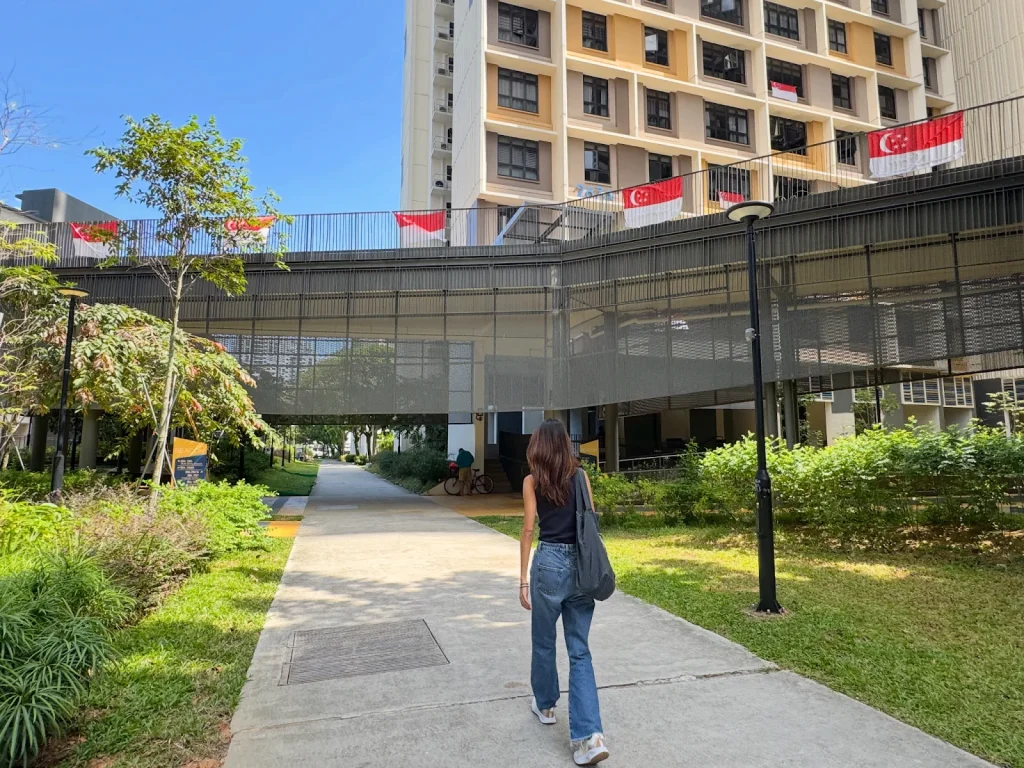
After the conversation with Jamie, I had a better idea of what to expect when I start applying for my own flat in the future.
Even better, I know what exactly my peers are talking about when they suddenly whip these terms out in front of me.
Next time the topic pops up, I can finally chime in instead of just nodding along.
This article was first published on Mothership. All photos courtesy of Mothership.