.svg)
How to Move Into Your HDB Flat
Learn about the features of BTO flats, defects inspection, season parking and tips for living in your new neighbourhood.
Last updated 6 April 2026
Moving into your HDB flat soon? As you settle into your home, this comprehensive guide covers everything you need to know – including features of BTO flats, defects inspection, season parking and tips for living in your new neighbourhood.
Settling Into Your New HDB Flat
Insurance
Your new home can be covered by insurance policies which offer protection in the event of unforeseen circumstances. Here is an overview of the different types of insurance for HDB flats:
Mortgage-reducing insurance like the Home Protection Scheme (HPS), which protects home owners from losing their flat in the event of death, terminal illness or permanent disability.
If you are using your CPF savings to pay for your monthly housing loan instalments, you must be covered by the HPS.
Fire insurance like the HDB Fire Insurance Scheme, to relieve the financial burden of repair work in the unfortunate event of a fire.
If you are taking up an HDB housing loan, you must be covered by HDB Fire Insurance.
Home content insurance. Depending on the policy, this type of insurance may cover renovation and fittings, home contents (e.g. furniture) and appliances.
Utilities
It is recommended that you set up a utilities account before moving in. Regardless of the electricity retailer, all home owners must open a utilities account with SP Services, which can be done physically at the SP Services Customer Service Centre at HDB Hub (conveniently after key collection), online or through the SP Utilities App. A security deposit is also required. After setting up the account, you can choose to switch over to any electricity retailer on the open market.
Features of HDB BTO Flats
If you are moving into a new BTO flat, learn more about the features of your new home and how to maintain them.
Drywalls
Your BTO flat's internal partition walls feature Severe Duty grade drywall with integrated sound insulation material for good soundproofing. A set of sample anchors (light to heavy duty) is provided in your Household Shelter. You can use them for installing wall cabinets, television sets, and other fixtures. When installing anchors, always avoid areas with concealed electrical wiring.
Download the complete drywall user guide (PDF, 457 KB) for detailed maintenance instructions.
Flooring and Skirting
Porcelain Tiles
Glazed porcelain tiles can be found in the kitchen and bathrooms of your BTO flat. The gaps between the tiles are filled with tile grout, which help accommodate thermal expansion and contraction.
Vinyl Strip Flooring with uPVC Skirting
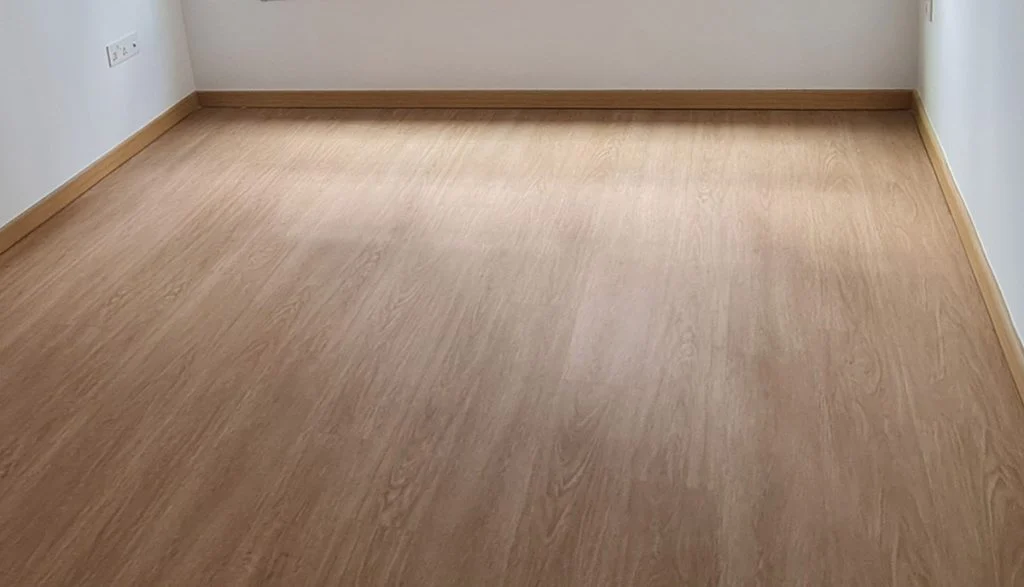
If you had opted for floor finishes under the Optional Component Scheme when you had booked your flat, your BTO flat will come with vinyl strip flooring. This type of flooring uses a 'floating' interlocking installation system that does not require adhesives, and it mimics timber aesthetics while offering excellent slip resistance and moisture protection. The accompanying uPVC skirting provides durable, water-resistant finishing.
To help maintain your vinyl flooring, you should:
Sweep regularly or use a slightly damp mop
Avoid excessive water during cleaning
Lift furniture when moving rather than dragging
Consider attaching soft pads to furniture legs to prevent scratches
Doors and Door Frames
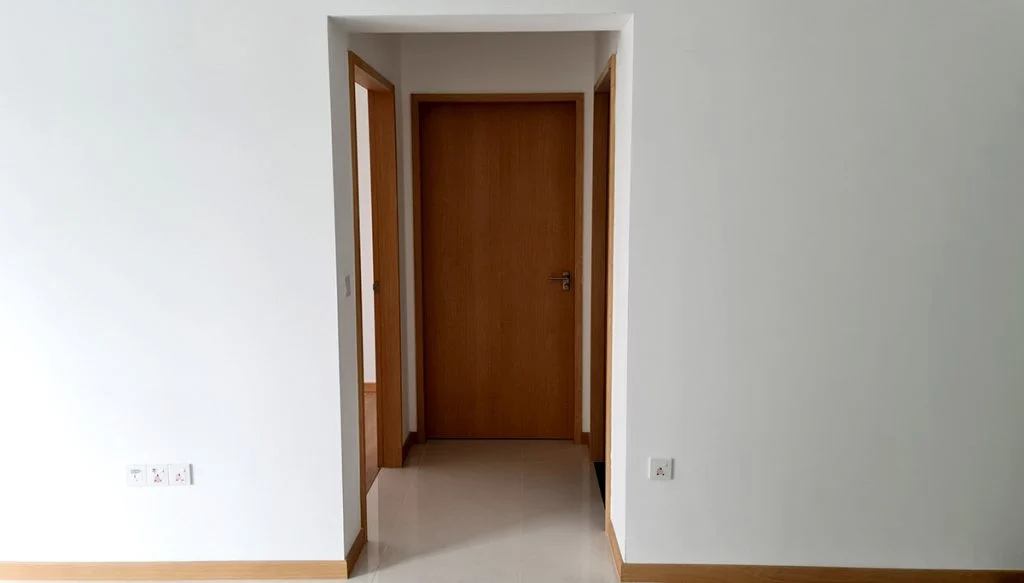
All internal doors and frames in your BTO flat are constructed from uPVC, offering superior strength, durability, and water resistance. Toilet bi-fold doors feature recessed handles for easy operation.
To protect your doors during renovation, request your contractor to cover doors and handles with corrugated cardboard or bubble wrap before commencing renovation works.
Kitchen Window
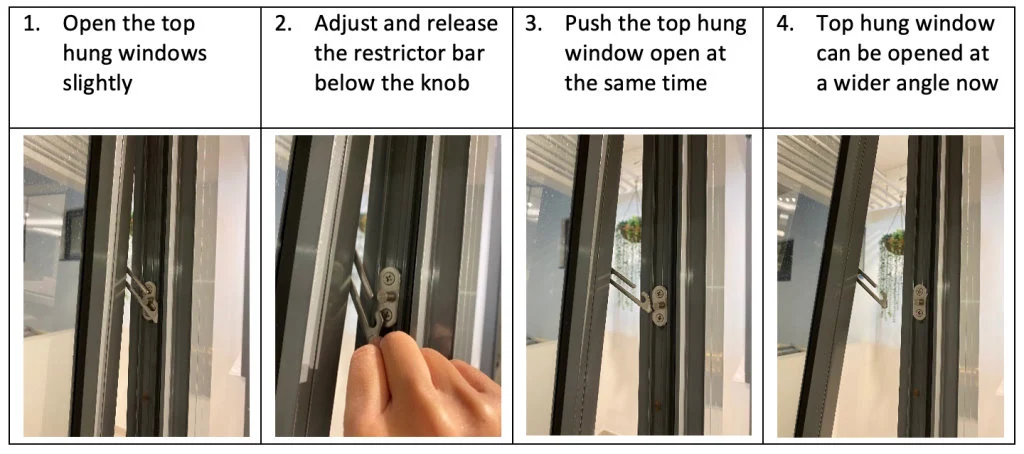
The top hung window between your kitchen and service yard in your BTO flat includes a window restrictor that limits swing range and prevents accidental impacts.

This safety feature can be detached if you require a wider window opening—simply follow these steps:
Home Fire Alarm Device (HFAD)
Your BTO flat is equipped with an automatic smoke detector mounted on the ceiling. This critical safety device triggers an alarm when smoke is detected.
You can test your HFAD by pressing the Test/Reset button. If the device is working, the light will blink and an alarm will sound. To silence the alarm, press the Test/Reset button again.
During renovation, you should cover the HFAD with a plastic sheet to prevent dust accumulation. After your renovation works are completed, remove the cover immediately.
For detailed information on the HFAD, consult the instruction manual in your flat or visit the Singapore Civil Defence Force (SCDF) website.

Sanitary Fittings and Dual-Flush WC Systems
In support of Singapore's water conservation initiatives, your BTO flat features PUB Water Efficiency Labelling Scheme (WELS)-certified sanitary fittings and dual-flush water closet suites. These fittings meet stringent PUB standards for flushing effectiveness and volume, helping you conserve water and reduce utility costs.

Household Shelter Door
The Household Shelter door is made of steel, making it significantly heavier and sturdier than other doors in your flat. The airtight seal means locking and unlocking require more force than normal doors. The Household Shelter door should never be removed or tampered with. To ensure smooth operation, apply lubricant to hinges and locks at least once a year.

Defects Checks in HDB BTO Flats
While HDB implements rigorous quality control measures throughout construction, minor imperfections in surfaces, fixtures, and fittings may occasionally occur. Fret not as all new HDB BTO flats include warranty coverage under the 1-year Defects Liability Period (DLP), commencing from your key collection date.
It’s easy to check for defects on your own. Here are some tips for checking defects in your BTO flat:
Go through each space systematically. Label any defects with painter’s tape or post it-notes, and note them down in your defect(s) list.
You may notice some slight colour variations in the floor tiles or timber flooring, or width of the tile grouting. These variations are normal characteristics resulting from natural material properties and the manual nature of construction work, and are not considered defects.
Critical Timeline: 30-Day Defect Reporting Window
You must report all defects within 30 days of key collection, before commencing renovation works. This timeframe is essential for establishing accountability – reporting defects after renovation has started makes it difficult to determine whether the issues were caused by the building contractor or renovation contractor, complicating the repair responsibility process.
Defect repair work typically requires less than two weeks to complete. Coordinate with Building Service Centre (BSC) staff early to align repair schedules with your renovation timeline.
Submitting Your Rectification Request to BSC
You can submit your rectification request by scanning the QR code in your Welcome Kit, or contact the BSC located within your BTO project. The BSC staff will review your reported defects, verify the issues during a joint inspection, and arrange rectification works. A final closing inspection will be scheduled upon completion of repairs to ensure all defects have been properly addressed.
Once you've completed the defects inspection process and reported all issues within the 30-day window, you can proceed confidently with your home renovation plans, knowing that warranty-covered defects will be rectified by HDB's building contractor.
HDB Season Parking
If you own a vehicle, you may wish to buy season parking at an HDB car park. Season parking is sold on a calendar month basis, and allows you to park your registered vehicle at a specific car park group during the validity period without paying short-term parking charges.
Season parking is sold on a first-come-first-served basis. For car parks with high occupancy rates, note that there is a priority allocation system to ensure fair distribution of lots. Depending on which priority group you fall under, different booking dates apply. Learn more about allocation of season parking on HDB InfoWEB.
Monthly season parking charges vary, depending on the location and type of car park you are applying for. You can check the current HDB season parking charges for cars, commercial vehicles and motorcycles, on HDB InfoWEB.
You may apply for HDB season parking online via the ‘Apply for New Season Parking’ e-Service, or the Mobile@HDB app available on the iOS App Store or Google Play Store.
You can also manage, transfer, or terminate HDB season parking conveniently using the e-Services on HDB InfoWEB.
HDB Living
Once you’ve settled into your new flat, it’s time to get to know your neighbourhood!
Stay Connected
Keep up with heartland happenings through HDB's social media channels and Life Storeys magazine.
You can also participate in the Lively Places Programme to enliven public spaces and bring neighbours together through community activities!
For the latest community updates, visit HDB InfoWEB.
Be a Considerate Neighbour
These are some simple acts you can do to make your neighbourhood pleasant for everyone:
Keep common areas tidy. Do not vandalise common areas or amenities.
Keep noise levels low, especially between 10:30pm and 7:00am.
Prevent killer litter. Do not throw items from your flat, and avoid placing items near the ledges of corridors, windows and balconies.
Avoid throwing bulky items down rubbish chutes, as they may choke up the chute.
Live Sustainably
Here are some tips for living green in the heartlands!
Reduce, Reuse, Recycle: Use reusable shopping bags, repurpose plastic bags for rubbish, and throw your recyclables into the designated recycling chute or bins.
Save Energy: Check Energy Labels of appliances and choose energy-efficient ones, set air-conditioning to 25°C, use LED bulbs, and maximise natural light.
Conserve Water: Select appliances with Water Efficiency Labels, reuse water for plants, use a mug when brushing teeth, and take shorter showers.
Go Green: Join community gardening activities to meet neighbours while beautifying your neighbourhood.